O' Romeo Review
Suggestions
Can watch again
No
Good for kids
No
Good for dates
No
Wait for OTT
No
Vishal Bhardwaj is among the few Indian filmmakers who works as a writer, director, composer, and occasionally, a lyricist and producer. He excels at adapting renown literary masterpieces, including Shakespeare's Macbeth (Maqbool), Othello (Omkara) and Hamlet (Haider). While preserving their essence, he reimagined these works so effectively that the films felt Indian to the core.
Now, he returns with O' Romeo. However, this Romeo has nothing to do with that of Shakespeare. This time, the story draws inspiration from Hussain Zaidi's book Mafia Queens Of Mumbai. That said, the film is very loosely based on the source material; apart from a few characters, most of the incidents and ideas are Bhardwaj's own creations. The dramatization is intense and often exaggerated. Yet, it still stands as compelling cinema. As always, Bhardwaj doesn't just narrate a story - he builds a world. This time, that world feels overtly fictional, but remains cohesive and immersive.
Ustara (Shahid Kapoor) is a contract killer who works for an IB official Ismail Khan (Nana Patekar), eliminating crime in Mumbai. Ustara isn't in love with anyone; however, he sleeps with a new woman almost every day.
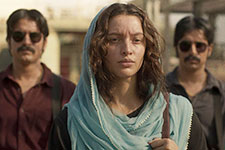
One day, Afsha (Triptii Dimri) approaches Ustara and pleads with him to kill four men - underworld mafia leader Jalal (Avinash Tiwary), police inspector Pathare (Rahul Deshpande), advocate Ansari (Resh Lamba) and drug businessman Anwar (Sarthak Khurana) - at any cost. She even offers herself as part of the deal.
But Ustara refuses and sends her away. She doesn't leave; instead, she waits outside his den for days. Eventually, she attacks Anwar herself at a restaurant. Anwar overpowers her and is about to kill her when Ustara appears and kills him.
From then on, a violent killing spree unfolds between Ustara's men and Jalal's gang across India, Nepal and Spain. Along the way, Ustara slowly becomes obsessed with Afsha.
Some director-actor combinations are roller-coasters. They are explosive. The duo Vishal Bhardwaj and Shahid Kapoor definitely fall into that category. Kaminey shook the system. Haider redefined cinema, controversies aside.
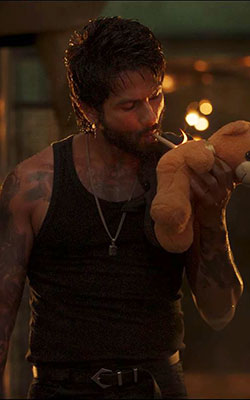
The first half of O' Romeo is deliberately slow, setting up a dark backdrop where Ustara doesn't love - he deals. Deals for money. Deals for lust. You see him with a tattooed body and cold eyes, operating within a gangland network where emotions are considered a weakness.
There, you also see Afsha, trapped in a world with only two options - power or death - and driven by a single motive: revenge against Jalal.
As the film moves into its second half, obsession takes over every emotion. The movie grows heavier and more atmospheric, and descends into pure carnage. It finally shows its true colours. Romeo's mask falls, and the monster emerges. Ustara no longer deals - the matters become personal. From a womanizer, he turns obsessive - hypermasculine and deeply flawed, yet willing to risk everything to save the love of his life, even though he isn't sure she loves him back. The action turns brutal, and the violence becomes uncomfortable (that's why "A") rather than entertaining.
It's also important here to mention that Vishal Bhardwaj makes the film more engaging by weaving in bits of '90s trivia - mainly songs, movies and cricket - though the actual plot is highly fictional.
Performance-wise, Avinash Tiwary and Rahul Deshpande stand out. You may have seen Tiwary earlier if you follow TV series, especially soaps. Here, he undergoes a complete transformation. He looks and sounds brutal, carrying an intimidating screen presence.
As for Deshpande - you've probably never seen him act before, because he hasn't. He is a renowned Indian classical singer and a staple in Vishal Bhardwaj's concerts. But here, he shocks you with his villainy as much as with his singing. Bhardwaj cleverly gives him moments that blend music with menace, mixing singing with killing. And he truly surprises you. Watch one of his concerts online and then watch O' Romeo - the contrast will amaze you.
Deshpande and Tiwary surprise the audience because no one expected them to pull this off. However, Shahid Kapoor delivers perhaps the best performance of his career. His transformation is complete. He looks dangerous, broken and rigid like a killer, yet hollow inside. He also handles both the dance and action sequences with precision.
Triptii Dimri is graceful yet intense - the emotional anchor of the movie.
Nana Patekar's mere presence is enough to create tension. He remains impactful as ever.
Disha Patani appears mostly for an item number, and beyond that, her role feels fleeting - almost like an extra you barely notice.
Tamannaah Bhatia plays Jalal's wife, but her character too is limited to just a few brief minutes.
As mentioned before, you may find issues with Vishal Bhardwaj's artistic choices, as this film isn't as grounded or realistic as his earlier works. However, the craft here is top-notch. There's action, songs, dances and sharp dialogues - many of them deliberately stylized and unreal - yet the film still feels poetic.
The first hand-to-hand fight and gun battle take place inside a theatre screening Dhak Dhak Karne Laga, with the action choreographed to match the beats of "dhak dhak" and "auch" - something only a director-composer could pull off. The same creative rhythm carries into the classical singing sequences that unfold amid violence.
Overall, the screenplay is tight. The action choreography is innovative, though definitely not family-friendly. The lead character's name is Ustara - meaning razor - and the razor itself becomes a recurring weapon in several fight scenes, often leaving the screen blood-drenched.
As for the music, it's vintage Bhardwaj. This time, too, Gulzar pens most of the lyrics, which are sharp, witty and layered. Among the tracks, Aashiqon Ki Colony and Ishq Ka Fever stand out as especially memorable.
To conclude, this may not go down as Bhardwaj's best work, but it is arguably his most meticulously crafted film. He retains his trademark grey morality - where the hero feels like a villain, the villain feels like a victim, and every act of violence carries a hidden, poetic sadness. It's powerful, disturbing and memorable, but not a weekend popcorn entertainer. It's a late-night discussion film.
If you love Bhardwaj's dark, poetic cinema, it's a must-watch. If you're looking for light masala entertainment, steer clear. Despite the songs, dances and choreographed action, this is far from a typical masala film.
Now, he returns with O' Romeo. However, this Romeo has nothing to do with that of Shakespeare. This time, the story draws inspiration from Hussain Zaidi's book Mafia Queens Of Mumbai. That said, the film is very loosely based on the source material; apart from a few characters, most of the incidents and ideas are Bhardwaj's own creations. The dramatization is intense and often exaggerated. Yet, it still stands as compelling cinema. As always, Bhardwaj doesn't just narrate a story - he builds a world. This time, that world feels overtly fictional, but remains cohesive and immersive.
Ustara (Shahid Kapoor) is a contract killer who works for an IB official Ismail Khan (Nana Patekar), eliminating crime in Mumbai. Ustara isn't in love with anyone; however, he sleeps with a new woman almost every day.
One day, Afsha (Triptii Dimri) approaches Ustara and pleads with him to kill four men - underworld mafia leader Jalal (Avinash Tiwary), police inspector Pathare (Rahul Deshpande), advocate Ansari (Resh Lamba) and drug businessman Anwar (Sarthak Khurana) - at any cost. She even offers herself as part of the deal.
But Ustara refuses and sends her away. She doesn't leave; instead, she waits outside his den for days. Eventually, she attacks Anwar herself at a restaurant. Anwar overpowers her and is about to kill her when Ustara appears and kills him.
From then on, a violent killing spree unfolds between Ustara's men and Jalal's gang across India, Nepal and Spain. Along the way, Ustara slowly becomes obsessed with Afsha.
Some director-actor combinations are roller-coasters. They are explosive. The duo Vishal Bhardwaj and Shahid Kapoor definitely fall into that category. Kaminey shook the system. Haider redefined cinema, controversies aside.
The first half of O' Romeo is deliberately slow, setting up a dark backdrop where Ustara doesn't love - he deals. Deals for money. Deals for lust. You see him with a tattooed body and cold eyes, operating within a gangland network where emotions are considered a weakness.
There, you also see Afsha, trapped in a world with only two options - power or death - and driven by a single motive: revenge against Jalal.
As the film moves into its second half, obsession takes over every emotion. The movie grows heavier and more atmospheric, and descends into pure carnage. It finally shows its true colours. Romeo's mask falls, and the monster emerges. Ustara no longer deals - the matters become personal. From a womanizer, he turns obsessive - hypermasculine and deeply flawed, yet willing to risk everything to save the love of his life, even though he isn't sure she loves him back. The action turns brutal, and the violence becomes uncomfortable (that's why "A") rather than entertaining.
It's also important here to mention that Vishal Bhardwaj makes the film more engaging by weaving in bits of '90s trivia - mainly songs, movies and cricket - though the actual plot is highly fictional.
Performance-wise, Avinash Tiwary and Rahul Deshpande stand out. You may have seen Tiwary earlier if you follow TV series, especially soaps. Here, he undergoes a complete transformation. He looks and sounds brutal, carrying an intimidating screen presence.
As for Deshpande - you've probably never seen him act before, because he hasn't. He is a renowned Indian classical singer and a staple in Vishal Bhardwaj's concerts. But here, he shocks you with his villainy as much as with his singing. Bhardwaj cleverly gives him moments that blend music with menace, mixing singing with killing. And he truly surprises you. Watch one of his concerts online and then watch O' Romeo - the contrast will amaze you.
Deshpande and Tiwary surprise the audience because no one expected them to pull this off. However, Shahid Kapoor delivers perhaps the best performance of his career. His transformation is complete. He looks dangerous, broken and rigid like a killer, yet hollow inside. He also handles both the dance and action sequences with precision.
Triptii Dimri is graceful yet intense - the emotional anchor of the movie.
Nana Patekar's mere presence is enough to create tension. He remains impactful as ever.
Disha Patani appears mostly for an item number, and beyond that, her role feels fleeting - almost like an extra you barely notice.
Tamannaah Bhatia plays Jalal's wife, but her character too is limited to just a few brief minutes.
As mentioned before, you may find issues with Vishal Bhardwaj's artistic choices, as this film isn't as grounded or realistic as his earlier works. However, the craft here is top-notch. There's action, songs, dances and sharp dialogues - many of them deliberately stylized and unreal - yet the film still feels poetic.
The first hand-to-hand fight and gun battle take place inside a theatre screening Dhak Dhak Karne Laga, with the action choreographed to match the beats of "dhak dhak" and "auch" - something only a director-composer could pull off. The same creative rhythm carries into the classical singing sequences that unfold amid violence.
Overall, the screenplay is tight. The action choreography is innovative, though definitely not family-friendly. The lead character's name is Ustara - meaning razor - and the razor itself becomes a recurring weapon in several fight scenes, often leaving the screen blood-drenched.
As for the music, it's vintage Bhardwaj. This time, too, Gulzar pens most of the lyrics, which are sharp, witty and layered. Among the tracks, Aashiqon Ki Colony and Ishq Ka Fever stand out as especially memorable.
To conclude, this may not go down as Bhardwaj's best work, but it is arguably his most meticulously crafted film. He retains his trademark grey morality - where the hero feels like a villain, the villain feels like a victim, and every act of violence carries a hidden, poetic sadness. It's powerful, disturbing and memorable, but not a weekend popcorn entertainer. It's a late-night discussion film.
If you love Bhardwaj's dark, poetic cinema, it's a must-watch. If you're looking for light masala entertainment, steer clear. Despite the songs, dances and choreographed action, this is far from a typical masala film.
O' ROMEO SNAPSHOT
-
Cast
-
Music
-
Director
-
TheatresNot screening currently in any theatres in Hyderabad.
O' ROMEO USER REVIEWS
Be the first to comment on O' Romeo! Just use the simple form below.
LEAVE A COMMENT
fullhyd.com has 700,000+ monthly visits. Tell Hyderabad what you feel about O' Romeo!
MORE MOVIES
SEARCH MOVIES
Dissatisfied with the results? Report a problem or error, or add a listing.
ADVERTISEMENT
SHOUTBOX!
{{ todo.summary }}... expand »
{{ todo.text }}
« collapse
First | Prev |
1 2 3
{{current_page-1}} {{current_page}} {{current_page+1}}
{{last_page-2}} {{last_page-1}} {{last_page}}
| Next | Last
{{todos[0].name}}
{{todos[0].text}}
ADVERTISEMENT
This page was tagged for
O' Romeo hindi movie
O' Romeo reviews
release date
Shahid Kapoor, Tripti Dimri
theatres list